Tips for the Perfect Wedding Ceremony Audio Setup
A wedding ceremony has plenty of emotional moments, but guests won’t get to enjoy them if they’re struggling to hear every word. Vows whispered into the breeze or a reading swallowed by a cavernous venue turns a sweet moment into a muffled mess.
Perfecting the audio setup for the wedding ceremonymakes sure that the officiant, couple, and readers sound natural. All it takes is a little planning for the microphones and venue.
Match the Audio to the Environment
A compact indoor venue has very different audio demands from a garden ceremony with 150 guests spread across a lawn. Indoor spaces reflect sound from hard surfaces such as glass and stone. Too much amplification produces echoes that blur spoken words. Soft furnishings, curtains, carpeting, and upholstered seating tend to absorb sound.
Outdoor ceremonies face a separate challenge: sound has very little to bounce off. Voices quickly disappear across an open space, especially when wind and a trickling fountain drowns out the words. Once you have a good grasp on the venue’s existing features, you can move forward with perfecting the audio system.
Choose Microphones for the Ceremony
A microphone doesn’t have to dominate the photos or leave everyone looking like they’re giving a conference presentation. The right option simply lets guests hear the meaningful parts without distracting from them.
Lavalier microphones, sometimes called lapel microphones, work well for an officiant or one member of the couple. Their small size keeps them relatively discreet, and wireless versions allow people to move naturally. Depending on the setup, one properly positioned microphone may pick up the officiant and both partners during the vows.
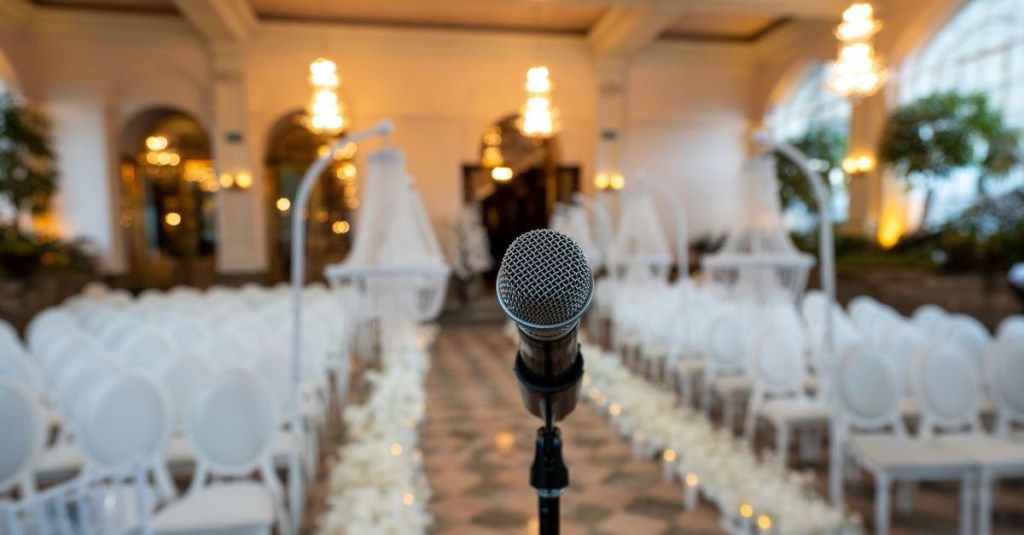
Handheld microphones suit readings, speeches, or singers who need direct control over microphone placement. A microphone on a stand works nicely for a designated reading area, particularly when several friends or relatives will come forward during the ceremony.
Place Speakers With Guests in Mind
Speaker volume isn’t the same thing as clear sound. Turning one speaker up to full force may overwhelm guests sitting nearby while people farther back miss half the vows.
Be sure to distribute sound across the seating area evenly. For a small ceremony, speakers near the front may provide enough coverage. Expansive spaces benefit from multiple speakers positioned in the middle or back of the seating area.
Keep speakers away from microphones whenever possible to prevent any ear-shattering feedback. That familiar high-pitched squeal will capture everyone’s attention, but not in the romantic way you had in mind.
Prepare for Outdoor Wedding Audio
Outdoor weddings look dreamy in photos, but Mother Nature has never signed a vendor contract. Wind can interfere with microphones, nearby roads introduce unexpected noise, and electrical access may sit nowhere near the ceremony site.
For microphones, wind protection helps reduce the rumbling or popping sounds that moving air creates. Equipment should also remain protected from moisture, even when the forecast looks perfectly lovely that morning. Weather has a sense of humor.
One of the common mistakes when planning event audio is assuming an outdoor ceremony will sound good enough because the guest list is relatively small. Even a modest group spread across an open lawn may struggle to hear quiet vows once wind and surrounding noise enter the picture.
Test the Ceremony Music
Music usually enters at several points throughout a ceremony, from the processional to the couple’s big exit. Each song deserves a proper test through the equipment being used at the venue.
Check the exact versions of every track beforehand. Streaming platforms sometimes contain live performances, remixes, extended intros, or similarly titled recordings, and none of those surprises belong in the middle of the bridal entrance.
Volume levels deserve a test run. Processional music should fill the space without drowning out cues from the coordinator or officiant. Once the ceremony shifts back to spoken words, the operator should know exactly when to lower or stop the music.
If musicians will perform live, confirm how their instruments and vocals fit into the audio arrangement. Their setup may require microphones, audio inputs, or placement considerations that recorded music doesn’t involve.
Plan for Ceremony Readers
Friends and family members giving readings deserve a little audio preparation, too. Someone who feels nervous about speaking in front of a crowd may naturally step away from a microphone or speak far too quietly.
During the rehearsal, show readers exactly where to stand and how close to remain to the microphone. A brief practice lets the audio operator adjust the level and gives each speaker a chance to settle into the setup.
Finalize the Plan With Vendors
As the wedding date approaches, confirm exactly who will handle the audio during the ceremony. DJs frequently provide audio at receptions, but the package doesn’t automatically include ceremony coverage, especially when the whole wedding takes place in separate locations.
During the final steps of planning a wedding, ask the DJ whether ceremony microphones, speakers, music playback, setup, and operation form part of the booked service. Getting those details settled prevents assumptions from turning into a stressful surprise the morning of.
When the ceremony happens somewhere other than the reception venue and the DJ won’t be present, speak with the facility coordinator about the audio plan. Ask what equipment the venue provides, who operates it, and how rehearsals or sound checks work. Knowing exactly who owns each responsibility keeps the setup organized when several vendors are at work.
Give the Setup a Proper Test
A sound check deserves more than someone tapping a microphone twice and declaring victory. Test the equipment from the places where people will speak, and have someone listen from several guest seating areas.
For outdoor ceremonies, perform the check as close to the actual setup time as reasonably possible because surrounding noise and wind conditions can influence what guests hear. Indoors, listen for echoes, uneven volume, or areas where speech loses clarity.
The rehearsal offers an ideal opportunity to run through microphone handoffs, music cues, and speaking positions. Even a short practice gives everyone involved a shared plan, so the audio fades quietly into the background once the ceremony begins.
Say “I Do” With a Flawless Sound System
Guests should be able to listen to the vows and laugh at the officiant’s perfectly timed joke. With the equipment tested and responsibilities confirmed, you’ll have the perfect audio setup for your wedding ceremony and one less detail to stress about.





Leave a Reply